Wines & Spirits Shop POS in Kenya: KRA Excise, EGMS Stamps, Age Verification and Shrinkage
How to run a wines and spirits shop in Kenya — KRA excise tax, EGMS digital tax stamps, age verification, county liquor licensing, counterfeit spirit risk, and the shrinkage controls that protect a high-theft category.
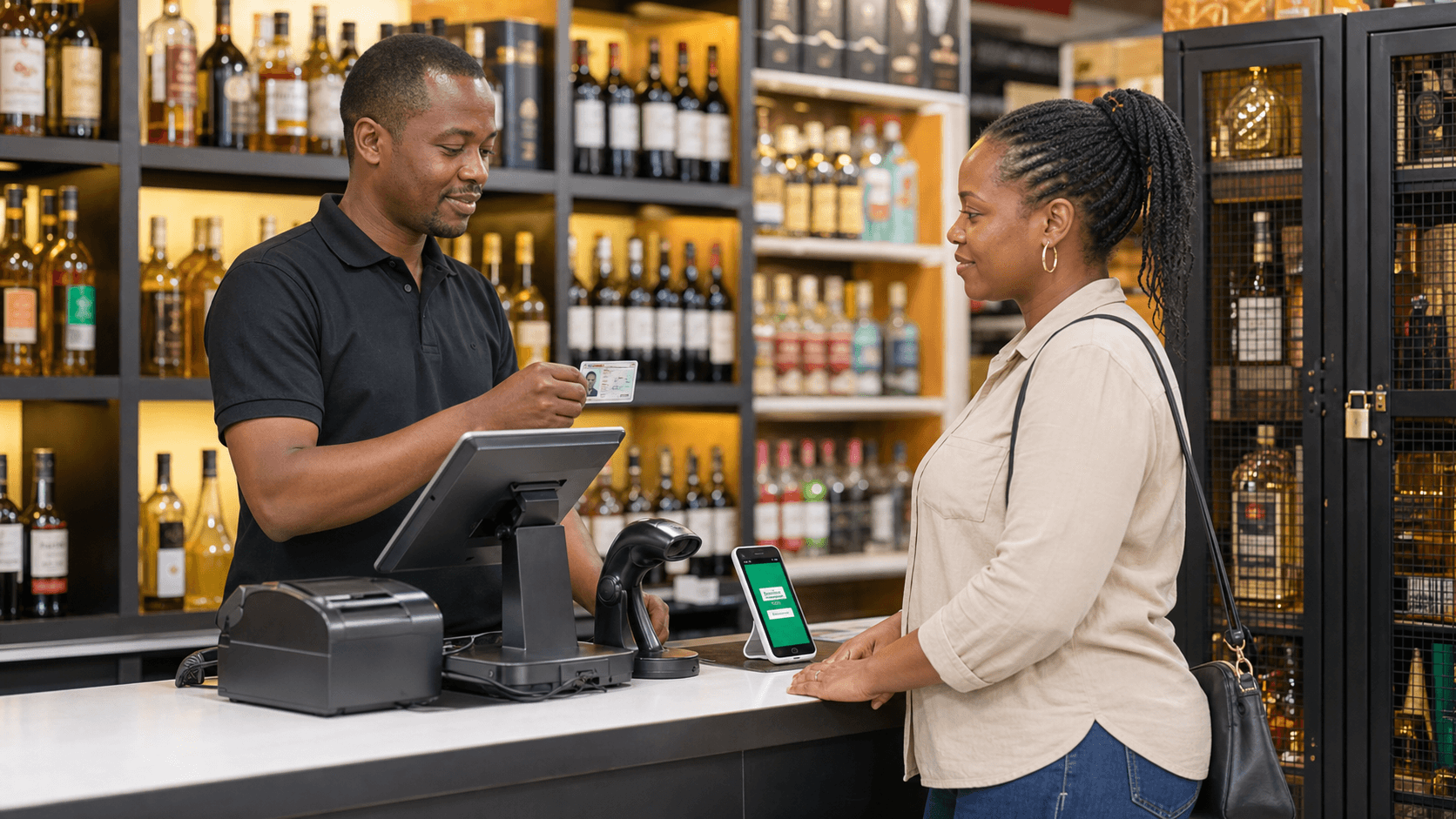
A wines and spirits shop in Kenya is one of the most regulated and most stolen-from retail categories in the country. KRA wants its excise tax, the county wants its liquor licence fees, the Ministry of Interior wants you closed by 11pm, KEBS wants every bottle to carry an EGMS digital stamp, and your customers want to slip a miniature into their pocket on the way out. The shops that thrive in this category have a POS that handles excise, age verification and high-shrinkage controls as core features — not afterthoughts.
This is for shops along Ngong Road, Westlands, Karen, the back streets of Kisumu and Eldoret, the supermarket alcohol aisles, and the hotel-attached liquor stores — anywhere licensed alcohol is sold for off-consumption in Kenya.
Licensing: What You Need Before You Open
Selling alcohol in Kenya requires a stack of licences:
- County liquor licence — issued by your county government's liquor board (NCCG Liquor Licensing Board for Nairobi, equivalent boards in other counties). Costs vary; in Nairobi a wines and spirits retail licence runs into hundreds of thousands of shillings annually.
- Single Business Permit — the county's general trading permit, also renewed annually.
- KEBS standardisation mark compliance — you cannot sell alcohol that is not KEBS-cleared.
- KRA PIN and VAT registration — alcohol is a high-turnover, high-tax category; expect to be VAT-registered from day one.
- Premises requirements — minimum distance from schools, religious institutions and government offices (varies by county; typically 300 metres).
The licence number should be printed on every receipt. A POS that does not print compliant receipts can get the licence suspended.
KRA Excise Tax and EGMS Stamps
Alcohol is heavily excised in Kenya. The excise tax is paid by the manufacturer or importer, baked into the wholesale price you pay. What is your problem at the retail point is the Excise Goods Management System (EGMS) — KRA's digital tax stamp programme.
What EGMS Means at Your Till
Every excisable bottle — spirits, wines, beers above a threshold — must carry an EGMS stamp affixed to the bottle by the manufacturer. The stamp has a unique QR-readable code that links to the KRA system, proving the excise tax was paid.
For a retailer, this means:
- Never accept stock without EGMS stamps on every bottle. Stock without stamps is either smuggled, counterfeit, or both. Selling it is a tax offence.
- Spot-check stamps at receiving — random scan a few bottles per case to verify the codes resolve correctly. Suppliers who are switching out stamped stock for unstamped will get exposed by random checks.
- KRA can audit your stock by scanning stamps. Every stamp scanned in your premises should match a stamp scanned in your supplier's outbound delivery. Discrepancies trigger investigations.
VAT-Inclusive Pricing and Receipt Discipline
Alcohol in Kenya is standard-rated for VAT at 16%, with excise duty already baked in at manufacturer level. Your shelf prices should be VAT-inclusive — the customer pays what is on the label.
The POS receipt must show:
- Shop name, KRA PIN, VAT registration number, and liquor licence number.
- Each item with quantity, unit price, total.
- VAT amount calculated and shown.
- Total payable.
- Payment method (cash, M-Pesa, card).
- Date, time, till number, cashier ID, sequential receipt number.
Missing any of these is a compliance issue. A good POS configures this once and prints it on every receipt without thinking about it.
Age Verification: The Counter Discipline
The legal drinking age in Kenya is 18. Selling alcohol to a minor is a criminal offence for both the seller and the licensee. The county liquor board can revoke a licence on a single confirmed sale to a minor.
What the Counter Should Do
- Ask for ID if the customer looks under 25. A five-year buffer above the legal age catches the borderline cases. National ID, passport, or driving licence — not a student ID.
- Train staff that refusing a sale is the safe option. If unsure, refuse. A lost KES 800 sale is nothing compared to a licence suspension.
- The POS can prompt the cashier on alcohol SKUs — every alcohol scan triggers a "ID verified?" confirmation. A small operational nudge that makes the discipline automatic.
- Refuse intoxicated customers. Same logic. The bouncer mentality is part of the trade.
The Operating Hours Question
Counties regulate alcohol operating hours. In Nairobi the standard window for off-licence wines and spirits sales is around 5pm to 11pm on weekdays (with variations), with daytime hours on weekends. The detail matters:
- Your POS should ideally enforce the trading window — alcohol SKUs flagged outside permitted hours need a manager override and a recorded reason.
- If your county allows daytime sales for certain premises (supermarkets with off-licence sections, hotel attached shops) the configuration is different.
- Special restrictions on certain days (elections, public holidays) are announced and must be respected.
Shrinkage: The Highest-Theft Category in Retail
Alcohol shrinkage in Kenya runs 4–7% of revenue in poorly controlled shops — three to five times worse than dry goods. The targets are clear:
- Miniature spirits — easily pocketed, high value per gram.
- Imported wines — KES 2,000–8,000 per bottle, often poorly tracked.
- Premium spirits — Jack Daniels, Johnnie Walker Black, Hennessy — high-value targets for both customer theft and staff substitution.
The Controls That Actually Work
- Miniatures behind the counter, not on the open shelf. If the customer cannot reach it, they cannot pocket it.
- Premium spirits in a locked cabinet for high-value lines. Staff retrieves on request. Slows the sale slightly, kills the loss completely.
- Daily count of high-shrinkage SKUs. Every closing shift, the cashier counts miniatures, premium spirits, and imported wines, and signs against the POS-recorded count. Discrepancies are flagged the next morning.
- Cashier PIN on every void. No shared logins. Voids and refunds above a threshold require a manager PIN. The audit log shows who did what.
- CCTV on the counter and behind the counter. Not as evidence — as deterrent. Staff who know they are being recorded behave better.
- Receiving discipline. Count every case at delivery, verify EGMS stamps, sign against the delivery note. Suppliers who short-deliver get caught fast.
Counterfeit Spirits: The KEBS Problem
Kenya has a counterfeit spirits problem. Fake "Johnnie Walker," fake "Smirnoff," and locally-bottled chang'aa sold as branded spirit — these have killed Kenyans and continue to circulate. As a licensed retailer, your job is to keep the counterfeits out of your shop.
- Only buy from authorised distributors. EABL, Pernod Ricard Kenya, Diageo Kenya, Almasi Beverages. A "very good price" from an unknown supplier is almost certainly a problem.
- Check the EGMS stamp. Counterfeit producers often skip stamps or use cloned codes. Random scanning catches them.
- Check the seal, the label print quality, and the bottle. Authentic spirits have consistent labels, intact tamper-evident seals, and clean printing. Wobbly text and loose caps are red flags.
- Report suspect stock to KEBS. Reporting protects your licence; selling protects nobody.
The M-Pesa and Cash Mix
Most wines and spirits sales are M-Pesa or cash. Few customers pay by card for alcohol because the average ticket is small. Configure your POS with:
- STK push as the default M-Pesa flow — the customer's phone gets a prompt, they enter their PIN, the sale completes in under 10 seconds. Faster than typing a till number.
- Cash drawer that only opens on a confirmed sale — no drawer-open-without-sale events. Every drawer opening should match a transaction.
- End-of-shift Z-report — cash counted, M-Pesa reconciled against the daily statement, any short-fall investigated before the cashier leaves.
FAQ
Do I need to display EGMS stamps to customers?
The customer does not need to see the stamp — but the stamp must be on the bottle when you receive it and when you sell it. KRA can spot-check your stock anytime.
What is the minimum age for purchasing alcohol in Kenya?
18 years. Sales to minors are a criminal offence and grounds for licence revocation. Train staff to ID anyone who looks under 25.
Can I sell wines and spirits 24 hours a day?
No. County liquor regulations restrict trading hours. Nairobi's standard off-licence window for retail wines and spirits is roughly 5pm to 11pm on weekdays with broader weekend hours, but check your specific county and licence class — supermarkets with separate alcohol sections may have different permitted hours.
How do I detect counterfeit spirits at receiving?
Buy only from authorised distributors. Scan EGMS stamps and verify codes resolve correctly. Inspect labels, seals and bottle quality. If the price seems too good, it almost certainly is.
What happens if I am caught selling unstamped stock?
KRA can impose tax and penalty assessments, the county can suspend or revoke your liquor licence, and in serious cases criminal charges apply. The risk to your business is total — never compromise on EGMS.
How much shrinkage is normal in a wines and spirits shop?
Poorly controlled shops lose 4–7% of revenue to shrinkage. Well-controlled shops keep it under 1.5%. The difference is process: behind-the-counter placement of small bottles, locked cabinets for premium, daily counts of high-risk SKUs, individual cashier PINs, and CCTV. The controls pay for themselves within months.
The Bottom Line
A wines and spirits shop in Kenya operates inside a compliance corridor narrower than almost any other retail category. Get the licensing right, refuse anything without EGMS stamps, verify age at the counter, respect trading hours, and run the shrinkage controls that the category demands. A POS that handles EGMS-aware receipts, age prompts, hour restrictions, and cashier-level audit trails turns the regulatory complexity into a daily routine. The shops that treat it as paperwork get caught; the shops that treat it as operational discipline keep the licence and the margin.
Ready to try DukaSale?
Free POS app for Kenyan dukas. Track sales, inventory, M-Pesa payments, and customer credit — all offline.
Download Free