Running a Mama Mboga or Kiosk Business in Kenya: Cash, M-Pesa, Deni and the Phone-POS Revolution
How to run a profitable mama mboga or neighbourhood kiosk in Kenya — daily Wakulima or Marikiti restock runs, mixing fresh produce with household goods, managing deni for regulars, M-Pesa Buy Goods, and the simple phone POS that finally fits the smallest retail business.
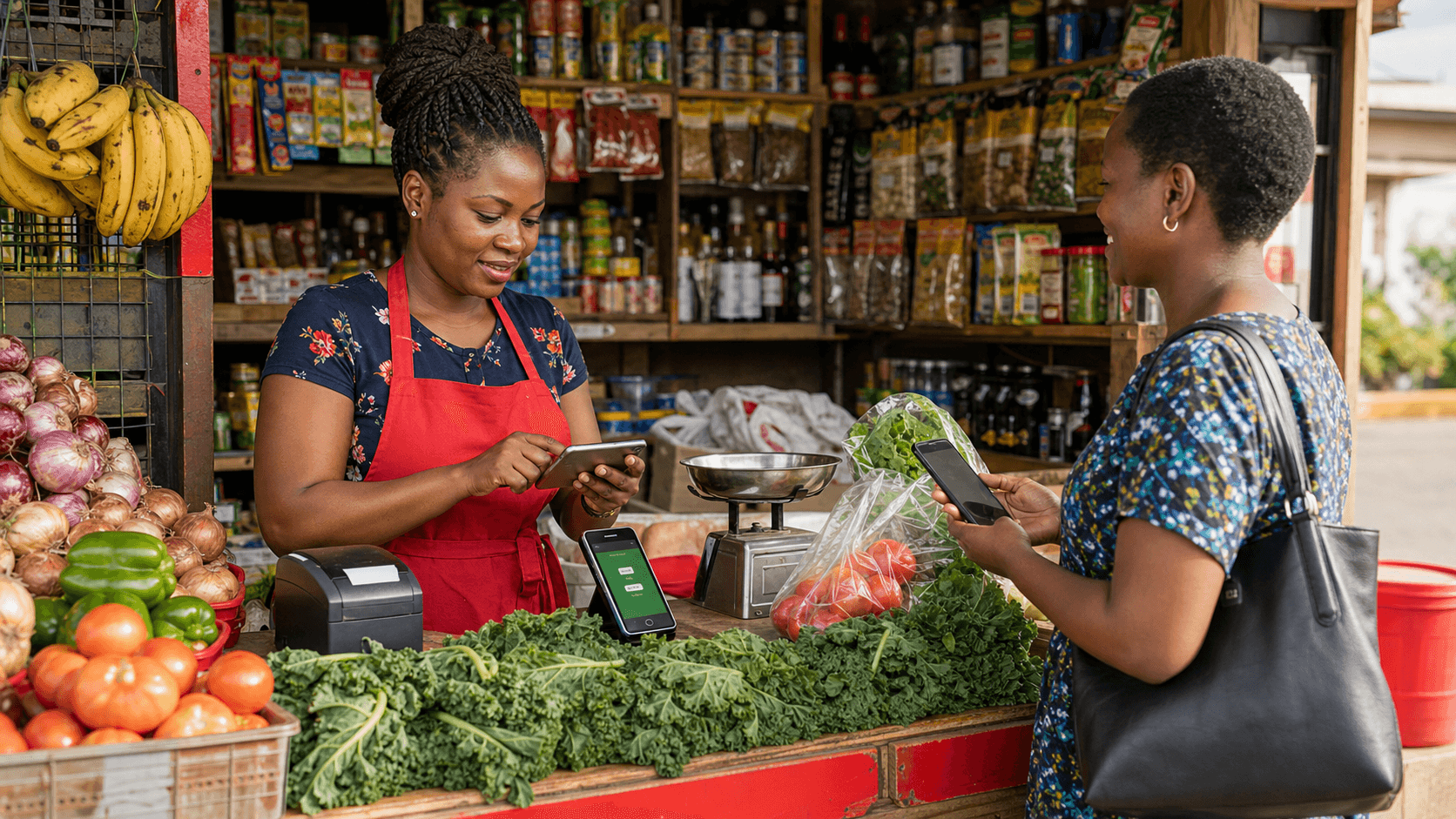
A mama mboga or neighbourhood kiosk is the smallest unit of Kenyan retail, but it is also where the daily commerce of every estate, every market street and every village happens. A single stall typically does KES 4,000–12,000 a day, runs on KES 50–500 per-transaction margins, restocks daily from Wakulima or Marikiti or the local distributor, and gives credit (deni) to half a dozen regulars who pay at end of month. The mama mbogas who grow are not the ones who work harder — they are the ones who know their numbers and use the tools that finally fit a shop that is run from a phone in an apron pocket.
This guide is for mama mbogas, neighbourhood kiosk owners, market stall traders, hawkers with semi-fixed pitches, and every micro-retailer who keeps the Kenyan domestic economy moving. The shop may be small; the operational discipline is the same as anywhere else.
The Daily Restock Rhythm
The mama mboga business runs on a daily cycle that starts at 4–5am with the supply run:
- Nairobi traders — Wakulima Market on Haile Selassie Avenue, sometimes Marikiti next door for slightly different stock. Some shops buy directly from farmers' lorries arriving overnight at the back of the markets.
- Mombasa traders — Kongowea Market.
- Kisumu traders — Kibuye Market.
- Every other town — its central market with a 4am opening for trade buyers.
At the market, you negotiate with the farmer or wholesaler, pay cash or M-Pesa, load a tuk-tuk or matatu, and head back to the stall by 6am to set up for the morning rush.
What to Track on the Buy Side
- Per-unit cost — KES 15 per bunch of sukuma wiki, KES 4 per onion, KES 25 per kilo of tomatoes. Capture the cost in your POS at the moment of purchase.
- Quantities bought — to compare against quantities sold.
- Wastage — tomatoes that didn't sell yesterday and are now too soft. Log them; they are real losses.
- Supplier preference — who gives you the best price, who has the freshest stock, who lets you owe until next week.
Pricing for the Neighbourhood
A mama mboga is not negotiating one-off retail prices — she is setting prices her regulars will accept consistently. The pricing reality:
- Customers know what 200 bob should buy. They will not pay KES 50 for one onion when the next stall is KES 30.
- Visible price tags (even handwritten on cardboard) build trust. "Hidden" prices feel like negotiation, which slows the morning queue.
- Margins on fresh produce are typically 30–60% gross, depending on day-to-day market volatility.
- Margins on packaged household goods (cooking oil, unga, sugar, salt, soap) are tighter — 8–18%.
- The fresh produce mix drives the foot traffic; the packaged goods cross-sell drives the average ticket.
The Mix: Produce, Household and Beyond
A profitable mama mboga stall sells more than vegetables. The expansion ladder most successful traders climb:
- Stage 1: Pure fresh produce. Sukuma, tomato, onion, dhania, fruit. Daily restock, daily sell-through.
- Stage 2: Add household basics. Cooking oil (re-bottled small sachets), sugar, salt, unga, rice in small packs, eggs. Stable demand, easier inventory.
- Stage 3: Add the "shop" categories. Soap (bar and detergent), tea leaves, sanitary products, matches, candles, basic stationery for school kids. Higher margin per item.
- Stage 4: Cooked food side-line. Mandazi, chapatti, samosa — usually prepared by family in the morning and sold through the day.
- Stage 5: Mobile money agency. Lipa na M-Pesa till, Equitel, KCB M-Pesa float. Margin per transaction is small but adds steady revenue and brings foot traffic.
M-Pesa Has Changed Everything
Five years ago, the mama mboga business was 95% cash. Today most stalls accept Lipa na M-Pesa (Buy Goods) for transactions above KES 50–100. The shift matters because:
- Customers carry less cash. If you do not accept M-Pesa, you lose sales.
- Reconciliation is cleaner. At end of day, your M-Pesa statement shows every transaction; you compare to your stall's records.
- Theft risk drops. Less cash on hand means less attractive target.
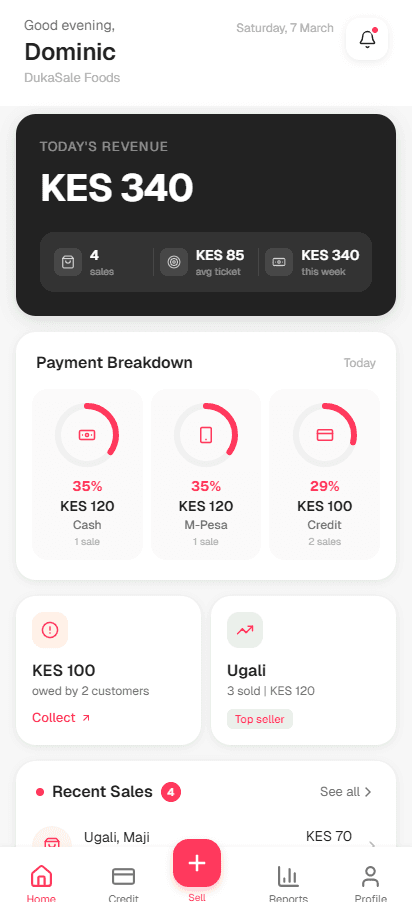
- The POS captures everything. A simple phone POS records each sale, payment method (cash or M-Pesa), and ties it to a customer (deni) or anonymous walk-in.
Deni: The Trust Economy
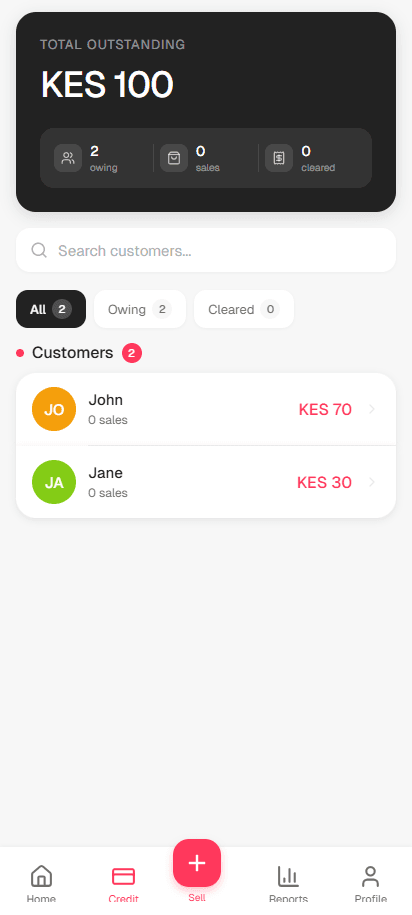
Every mama mboga has regulars who buy on credit — deni. The neighbour who pays at end of month, the boda boda rider who pays at week-end, the schoolteacher who collects sukuma daily and clears the balance on payday. Deni is the trust that holds the local economy together. It is also the fastest way to drain a small shop's working capital if it is not managed.
The Discipline That Works
- Record every deni transaction immediately. Not in a head, not at the end of the day — at the moment.
- Set a quiet ceiling per customer. Most regulars settle at KES 300–800 outstanding before payment. Above that, slow down or stop.
- Send a weekly WhatsApp reminder. "Habari Mary, current balance is KES 450. Karibu kulipa ukipata nafasi." Friendly, not aggressive.
- Track total deni against your turnover. If you do KES 200,000 monthly turnover and your total outstanding deni is KES 80,000, you are financing the neighbourhood. Tighten.
- Cut credit to consistent non-payers. One customer who owes KES 3,000 for four months is dead weight. Move them to cash-only quietly.
The Phone POS Revolution for the Smallest Shops
Until recently, point-of-sale systems were built for shops with computers, screens, and trained staff. Mama mboga did not need those. What changed: free, simple, Android-based POS apps (DukaSale Mobile POS being one) that turn the phone in the seller's pocket into a real till, no extra hardware needed.
What a Phone POS Actually Solves
- Sales recording — every transaction logged, no notebooks required.
- Stock tracking — what came in, what was sold, what's left. End-of-day count against system count.
- Deni management — every credit transaction tied to a customer profile, balance updates automatically.
- M-Pesa integration — STK push from the POS so the customer's phone gets the prompt directly, no Buy Goods till number typing.
- Daily and weekly reports — what sold, what didn't, who owes what, total revenue.
- Offline operation — works without internet (market signal is unreliable), syncs when connectivity returns.
The shop is no smaller than it was; the operational visibility is much larger. A mama mboga who knows last week's margin per category, who owes what, and which items always sell out by lunch is a mama mboga who is on the path to a second stall.
Scaling From a Stall to a Small Shop
The progression mama mbogas follow:
- Single stall, family operated. Daily cash flow funds daily restock; no employee, no fixed shop.
- Stall plus side-line. Add cooked food, mobile money agency, or a small adjacent product range.
- Move to a small fixed kiosk. Rent a structure; expand stock range; consistent location builds repeat customers.
- Hire a helper. Family or trusted employee; owner can split between restock runs and counter selling.
- Open a second location. Different estate, different customer base, same playbook.
Each step requires more record-keeping discipline. The trader at stage 1 who is "doing OK on instinct" rarely makes it to stage 4 without the systems to back the growth.
FAQ
Do I need to register my mama mboga business?
Yes — single business permit from your county government and a KRA PIN. Once turnover passes KES 1 million annually, register for Turnover Tax (TOT) at 1.5%. Above KES 5 million, register for VAT. Most mama mboga businesses sit comfortably below the VAT threshold.
How much working capital does a mama mboga need?
Daily working capital is the morning restock cost (typically KES 3,000–8,000) plus a few thousand to cover deni-in-progress. Float of KES 8,000–15,000 lets a single-stall operator run smoothly. Bigger floats unlock buying directly from farmers at better prices.
Can I really run my mama mboga shop on a free app?
Yes. Apps like DukaSale Mobile POS are designed exactly for this scale — runs on any Android phone, no monthly fee, full offline operation, M-Pesa integration, deni tracking, daily reports. The system that the supermarket on the corner uses is now available to the stall outside it.
What is the typical margin in fresh produce?
30–55% gross margin on a good day, 15–30% on a slow day. Wastage (5–15% of stock) eats into the gross; net margins typically settle at 25–40% blended. Cooking oil, sugar and packaged goods sit lower (8–18%); the produce side does most of the heavy lifting.
How do I handle customers who push for too much deni?
Set the conversation early. "Mary, my deni ceiling per person is KES 500. After that I have to wait for payment before more." The policy is impersonal — it is not a personal rejection. Most regulars respect it because the alternative is no credit at all.
The Bottom Line
A mama mboga is not a small version of a supermarket — it is its own business with its own rhythm, its own customer relationships, and its own margin discipline. The technology to run it well — a phone POS with deni, stock and M-Pesa support — finally exists at a price point that fits the smallest retailer. The mama mbogas who grow are the ones who pair the daily commercial instinct they already have with the operational visibility a simple POS provides. The instinct is what made the business; the system is what scales it.
Ready to try DukaSale?
Free POS app for Kenyan dukas. Track sales, inventory, M-Pesa payments, and customer credit — all offline.
Download Free